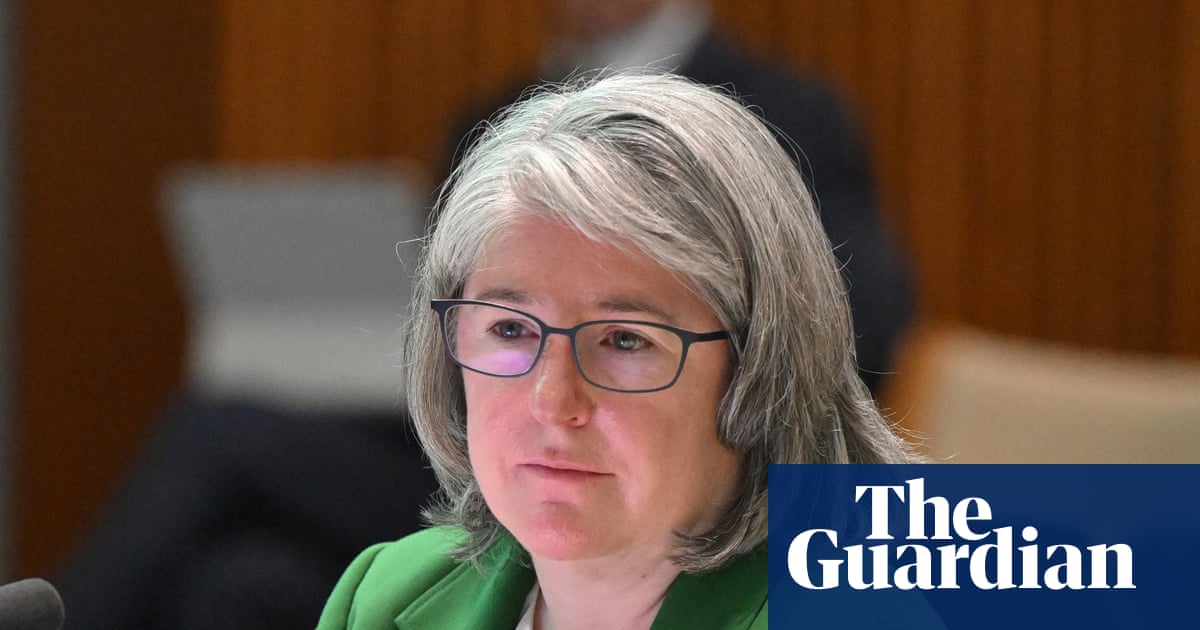
Defence department secretary Meghan Quinn during Senate estimates on Thursday. Photograph: Mick Tsikas/AAPView image in fullscreenDefence department secretary Meghan Quinn during Senate estimates on Thursday. Photograph: Mick Tsikas/AAPDefence backed claim that social media footage of public servants could invite bullying Official’s controversial September request for Senate hearing footage to not be shared on social media has been heavily criticised
Get our daily political email, free app or daily news podcast
The secretary of the defence department approved a senior official’s controversial idea to tell a Senate hearing that footage of public servants giving evidence should not be shared on social media because it could invite online bullying and raise national security concerns.
Emails obtained by Guardian Australia under freedom of information reveal deputy secretary Celia Perkins’ planned request to the parliamentary inquiry was flagged with the offices of deputy prime minister Richard Marles and assistant defence minister Peter Khalil, and received the backing of department secretary Meghan Quinn.
Perkins – defence’s deputy secretary of security and estate – drew criticism across the political divide with her 4 September statement to a committee hearing, where she said defence witnesses “do not consent to the reposting of our evidence to social media sites”.
She pointed to a submission from the secretaries board of the Australian Public Service, which had raised similar concerns about evidence being taken out of context, and alleged “edited and embellished” videos from previous hearings had “generated significant highly inappropriate and highly personal commentary that was distressing for staff and invited ridicule, hostility and abuse”.
The Greens senator David Shoebridge instantly objected, saying: “This is evidence given in an open public hearing … These witnesses do not get to censor what the Australian public sees.”
The committee rejected Perkins’ request on the advice of the Senate clerk.
Newly revealed correspondence shows that concerns about online bullying, as well as national security fears, were used as a “defensible” reason to not share clips from hearings online – and that the plan was backed by the defence department.
“Meghan is fully supportive, as is [Khalil]. I discussed today in a meeting with [Khalil] and staff from [Marles] and his office,” Perkins told two fellow deputy secretaries two days before the hearing.
Guardian Australia requested documents under FOI from the defence department relating to the preparation of Perkins’ statement. Emails between senior department officials showed Perkins’ proposal to make such a statement had been strongly endorsed by her colleagues and superiors, and that she had told Quinn on 25 August that officials could be put in danger if their evidence before public committees was published online.
“As senior leaders in Defence – we actively discourage security clearance holders from a social media presence that identifies us and our roles,” Perkins wrote to Quinn, outlining “core arguments” to support her statement.
“And these post[s], designed to invite outraged responses – increase the personal risk from malign online actors, including cyber and foreign intelligence threats.”
The offices of Marles and Khalil were contacted for comment. Neither provided an on-record response, but Guardian Australia understands neither office directed Perkins on the content of her statement.
Defence did not supply a response to Guardian Australia, but a spokesperson pointed to Quinn’s opening statement to a Senate estimates committee on Thursday, in which she said she supported the submission from the secretaries board and claimed that the treatment of staff after committee hearings could sometimes conflict with an employer’s duty to ensure the health and safety of employees.
In the 25 August email, which discussed the upcoming hearing, Perkins told Quinn she wanted “to add an explicit statement that the Defence witnesses appearing do not consent to our evidence being reproduced in edited format on social media platforms”.
“We’d need to settle a form of words that is defensible,” Perkins wrote, outlining concerns about maintaining a safe workplace for staff and that previous hearings led to “significant vile, personal commentary that was distressing for staff and invited online bullying.” Perkins also raised the concern about cyber and foreign intelligence threats.
In response, Quinn wrote: “Very happy to support you using such words.”
On 2 September, Perkins emailed two other deputy secretaries in the department, John Reid and Cath Patterson, flagging her intention to make the statement and “to specifically call out the social media posting matter”, and seeking their feedback on wording.
Patterson responded to Perkins’ email: “Those words look fine – polite and clear and safe given in the Sec Board submission”.
Reid concurred: “I agree with Cath; this is a good statement and makes the point clearly and respectfully.” Reid suggested minor changes to Perkins’ original suggested wording, with that version read at the committee.
Fox Style News Syndicate. Sourced from broadcast reporting: Read Full Source Coverage.