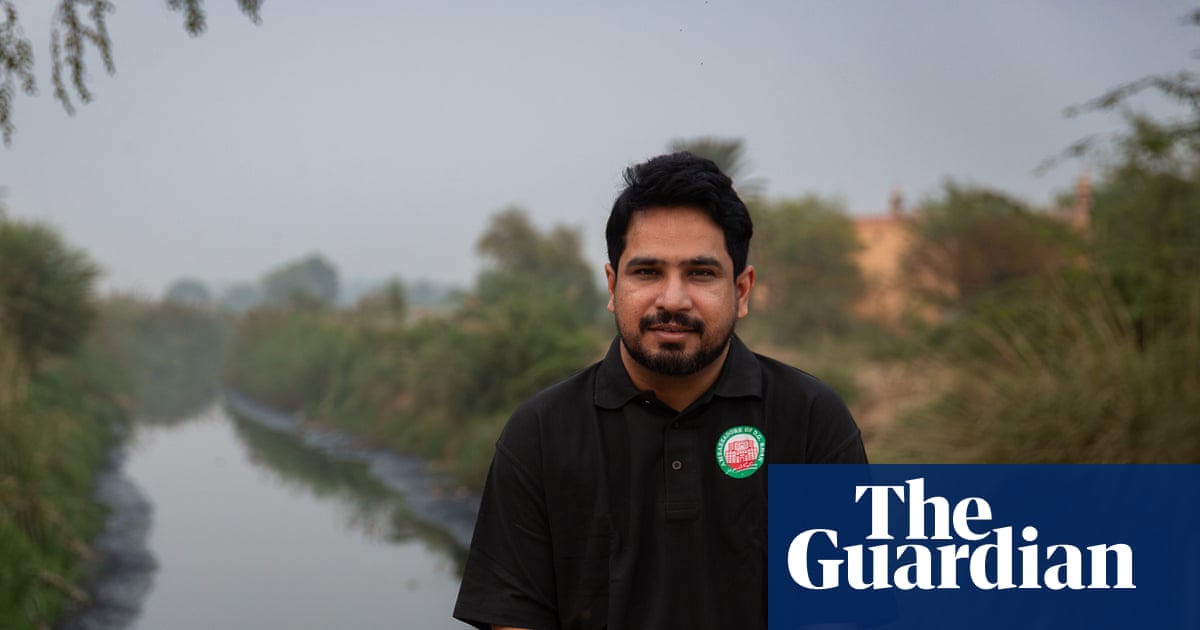
When the floods hit Pakistan he went out to help. Then the water reached his own family. This is Imran Lodhi’s story
Disaster: Pakistan intense monsoon rainfall
Imran Lodhi is a university lecturer with a doctorate in climate change and sustainable development. The 41-year-old was living in Dera Ghazi Khan, a city in south-western Punjab, when floods devastated provinces across Pakistan. Climate change made the monsoon rainfall that caused the floods more intense.
In 2022, I was living in an area that had less risk of flooding. I had a small child and my PhD thesis was just a few weeks away. I tried to avoid flood news on social media until I saw a picture of a two-year-old girl who was buried in mud. It was probably her last breath. She died after that. That was the turning point.
View image in fullscreenImran Lodhi immediately rallied friends to help victims of the devastating flooding across Pakistan in 2022. Photograph: Zoral NaikI immediately called my friends, six to seven people, in a mosque. I talked to them: “We don’t know what to do, but at least we can start from somewhere.” Initially, it was food. We hired some commercial cooks.
We planned to work only in villages close to our city. A lot of people were taking refuge in nearby high places, high enough that the water did not reach them. On the first day we went with some food to the nearest village.
When the rain is over, the sun comes out. Usually, it’s a good sign. But, in those areas, it didn’t feel good. It felt like it opened a scar. The pain that was hiding somehow had become open. It was like being naked. I could see trolleys, tractors, vehicles and homes all drowned in the flood. There was nothing from the government, nothing from any development sector. There was no camp. People were just living under open skies.
Men felt that their women being in an open place was a kind of emotional damage for them. It was not normal for most of the people here. Many women never came out. They came out for their work, the agriculture work, but not sitting that openly among the public. Their hair was full of dust and dry mud. Their clothes had a heavy layer of dry mud; no shoes on their feet. Mothers were not breastfeeding. Babies crying for milk, and the milk was not there. Mothers trying to soothe them with fake sounds.
The cows did not have feed and were not giving milk. Many of the animals were lost, their bodies wide open, decomposed. Then the water, which stayed there for a week, started to smell very bad. There was no good smell.
View image in fullscreenFamilies displaced by flooding in Balochistan province were forced to live in tents on causeways and other higher ground. Photograph: Fida Hussain/AFP/Getty ImagesWe prepared food in the morning. Then we prepared food at lunchtime. We generally finished distributing food around 8pm. One night it was 11pm and we thought some people might not have food. So we just cooked some food late at night and went to every camp.
One old woman started to laugh. I was surprised. I asked her: “It’s OK, we have food, but why are you laughing?” And she said: “I was just complaining, ‘Lord, that you left me with an empty stomach today.’ And suddenly you appeared.”
It was a very strange experience for her. For us also. People, when they are in tough conditions, are attached to their beliefs. And, when things like that come up, they establish a spiritual connection with the people who are helping out.
View image in fullscreenFlooding in the historic city of Sehwan in September 2022. The climate crisis made monsoon rainfall more intense. Photograph: Akhtar Soomro/ReutersWe posted on social media. We tried to mobilise. A lot of people contacted us who were from other parts of Pakistan. Money poured in and we kept expanding the team. From two or three villages, we started to cover the entire district, and then almost the entire region.
The government protocols were to not go into certain areas that looked dangerous or were not safe for a boat. Families were trapped, many, many kilometres into the water. There was no land in one village. Small wooden cupboards were hung on trees so stuff could be saved from the water. The immediate shelter was a big tree near them. The whole family was in the tree. The elders were lying on the branches. They somehow made a swing for the kids. They spent days in those trees.
A few villages were completely destroyed. Not a single home was standing. Everything was in shock, even the trees. One old woman who was living with her married kids was not ready to leave that rubble. She was so attached to that home that she felt like there was no life after it. She had a small cupboard in which she kept some small things to sell, for her independence. She was so concerned about that small cupboard. When I reached there, that cupboard was all broken.
View image in fullscreenPeople use a raft to navigate a flooded district of Hyderabad, Pakistan, in August 2022. Photograph: Akram Shahid/AFP/Getty ImagesOne day I had a fever and my wife stopped me: “Don’t go out – you are not well enough to help other people.” But I still went out to a village to help people. When we reached there, I got news that the city we were living in – which I thought was safe – suddenly was a source of threat. There was water coming toward the city. Within hours, the water would be in the city. My family was there. And I was almost 100km away.
So I rushed back. But the road toward the city was cut off by the flood. There was no way I could go back to my family. I called my wife and I asked them to stay vigilant and look out for water in the city. I gave them some suggestions: how they could save themselves and evacuate. That was a very, very tough call.
View image in fullscreenChildren take refuge in the grounds of a school after flooding in Jacobabad. Exceptional monsoon rainfall from June to October 2022 killed more than 1,700 people in Pakistan. Photograph: Akhtar Soomro/ReutersEventually, the city was saved. Next day, we took a boat to get past the road that was cut off. Sitting in that boat, I was thinking about my family. Once I reached the other side, I called some people to take me home.
When I reached home, I had a very strong fever and I spent that day at home. I tried to behave normally, but everybody knew I was not feeling well. I took one day off from community work.
The next day I wanted to stop. But the problem was, I was in the middle of that network. If I stop, this whole process will stop. This whole network of relief work will stop.
The next day, even with a high fever, I left for the field because I didn’t want that to stop. When I grew up, the community fabric was very strong. It was common practice that whenever people got sick, got in an accident, hospitalised, people would visit the person and share some money.
View image in fullscreenRescue workers use a boat to transport children after flooding in Dera Ghazi Khan, Punjab province, in August 2022. Photograph: Shahid Saeed Mirza/AFP/Getty ImagesThis was the kind of culture I observed happening around me.
I went back to those areas where the flood came. There was still some water standing so there were remains of that devastation. But there’s a very common sweet in that area we call jalebi. I can smell that sweet in those villages. I see shops open. I see farmers, labourers. I felt good watching people working again. It looked like life was coming back.
There was an annual poetry event happening three months after the flood. Saraiki culture is very rich, one of the oldest. I was consulted by one of my friends who is the organiser of that event. Should we suspend this year’s events or not?
I said you should never suspend the event. Let people believe the normalisation, let people believe in the spirit of survival. They organised the poetry event.
This is climate breakdown was put together in collaboration with the Climate Disaster Project at the University of Victoria, Canada. Read more.
Fox Style News Syndicate. Sourced from broadcast reporting: Read Full Source Coverage.